
Goat Herd Management: Managing pregnant does
One of the areas of management I’ve changed quite a bit over the past few years is how I manage my pregnant does. As with all my other writing I’m not an expert nor am I a veterinary, these are the steps that work for my herd. They may or may not work for your herd.
Goats gestate for about 5 months. I really don’t worry about the pregnant ones until the last month of pregnancy. That is when they start getting the special treatment.
Pregnant does and their nutrition needs
For the four months of pregnancy I provide good quality hay (timothy and alfalfa) and loose minerals. Pregnant goats nutrition needs only really start increasing in the last month and then is also when you might see metabolic issues.
I slowly begin feeding grain in the evening 30 days before their due date. I feed a grain with deccox in it. Goats always carry some amount of coccidiosis and we are feeding a coccidiostat to reduce the amount in the environment to aid in preventing coccidiosis in the kids. I feed Kalmbach Start Right because this is what I feed the kids, so it is readily on hand. I feed per the label instructions:
Feed 1.51 lb per 100 lb of bodyweight per day to provide the recommended dose of 22.7 mg decoquinate. Feed for at least 28 days during periods of exposure to coccidiosis or when experience indicates that it is likely to be a hazard.
Supplements
The one supplement everyone gets 30 days before kidding is Selenium and Vitamin E gel. Some people will argue that the dosage is not enough to make a difference and I don’t have a comparison without. I continue to give this to my does. Others will use BoSe instead which is an injectable variety, but I personally worry about overdose. If you want to try BoSe in the US you need a veterinary prescription. I always have BoSe on hand just in case I needed it for kids struggling after they are born.
Konefal Method for reasonable kidding times
The other important item regarding feeding is the timing. I feed grain at night to my pregnant does and this is also when I put out alfalfa. They have hay available at all times, but I provide the “good stuff” in the evening. A rancher discovered this phenomena now named after him the Konefal Method in the 70s on his cattle ranch and it appears to apply to all ruminants.
Since I switched to feeding this way I’ve only had one birth in the middle of the night. The exception last year was I had one doe kid in the middle of the night, but she was already in labor when I offered her evening grain and was not interested in eating at that point.
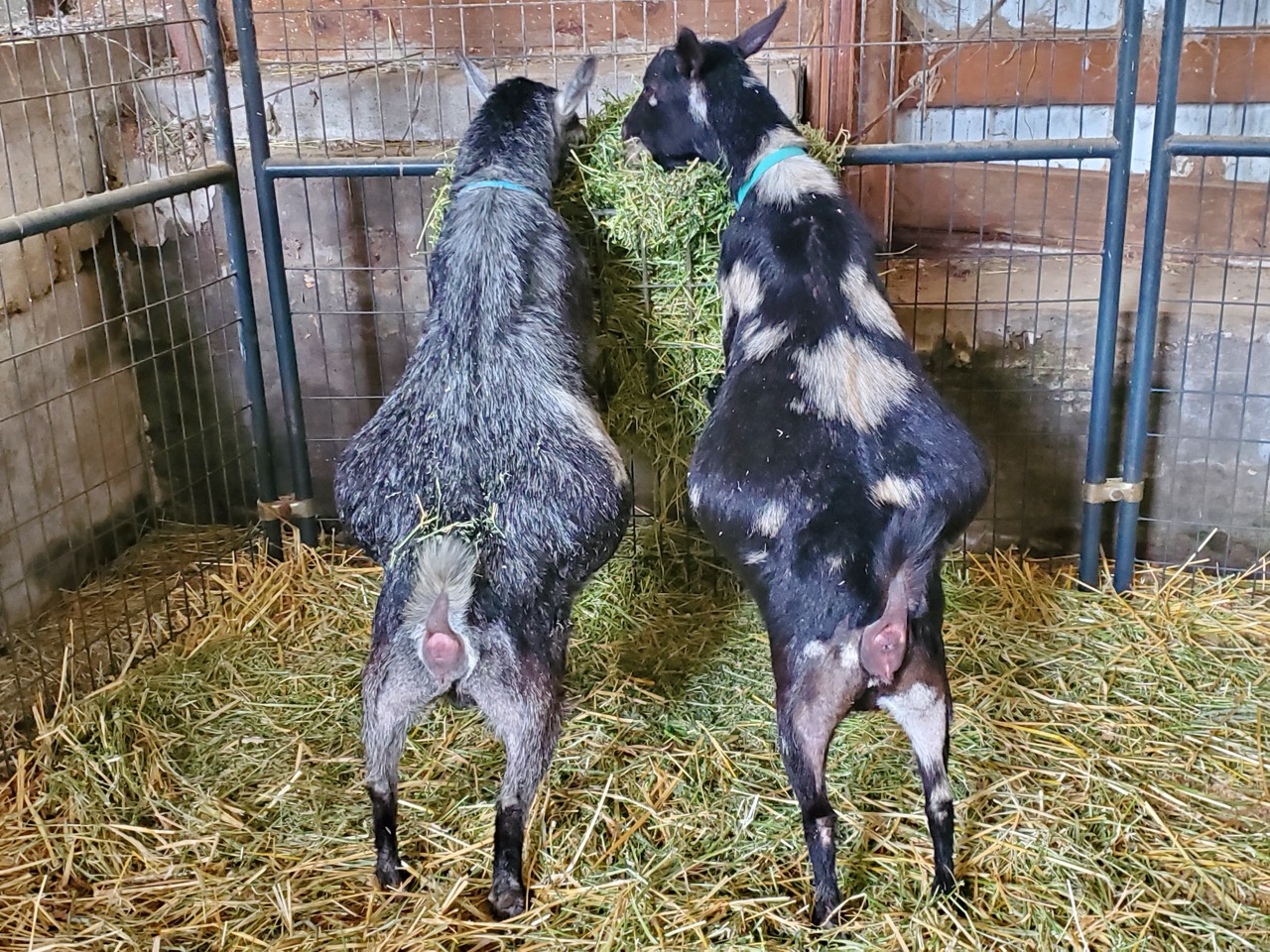 Very pregnant goats enjoying their evening alfalfa
Vaccinations
30 days before kidding is also when I provide a CDT vaccine. These protect against clostridium perfringins type C and D (overeating disease) and clostridium tetani (tetanus). This shot serves as the doe’s annual booster and the timing is so antibodies are passed on to the kids. The kids will still need a two shot series later to ensure they are protected after the period where they are relying on their dam’s antibodies.
Things to watch out for in late goat pregnancy
Other than the actual birth which can have its own set of complications there are a few things I look out for in my does late in pregnancy. The main things are similar to any other goat, I look for them to be off their feed or acting strangely in any other way. If I suspect anything I check them for ketosis which is an energy imbalance. You can use urine strips for humans that can be bought at any pharmacy to check for ketones. There is also a blood ketone meter for cattle that works for goats (the human blood tester will not work). Treatment for these issues deserves its own coverage.
The big moment: baby goats!
If all these things go right then sometime between roughly 140-158 days my doe delivers her kids.
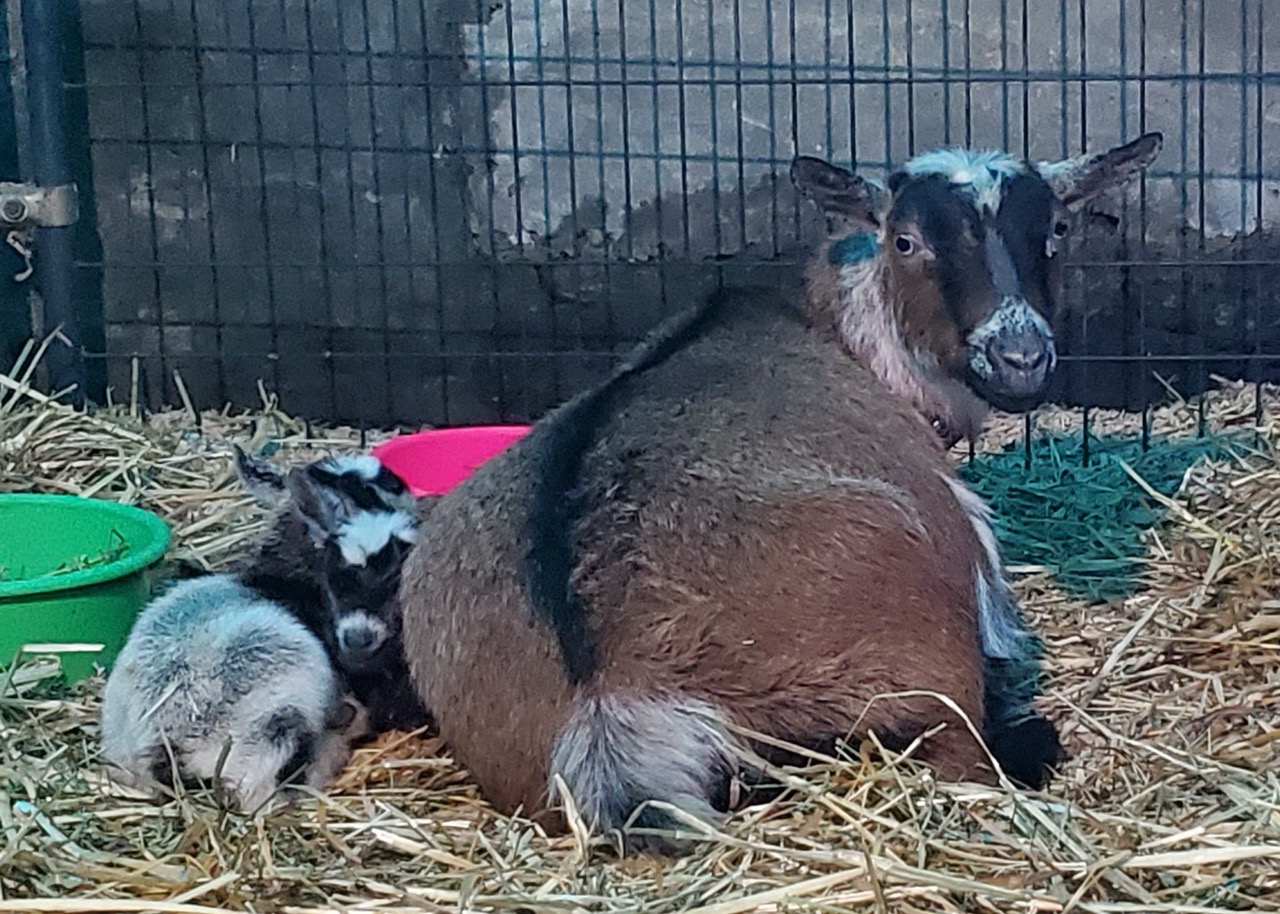 Savy showing the literal fruits of her labor