Goat Education in February 2024
February was fairly quiet here as most of our kidding is happening in March. I’ve been dreaming of show season and furthering my goat education to pass the time. Last month I listened to a few podcasts that made me consider my herd management.
Bladder Stones
Baas and Bleats is a Podcast hosted by Dr. Michelle Buckley from the American Association of Small Ruminant Practitioners. I listened to their episode on Bladder Stones which made me rethink some of my feeding of my wethers Taco and Tuesday. Bladder stones are quite dangerous for male goats, they can block them from urinating and the prognosis is often not good depending on the type of stone. Previously I had thought too much phosphorous was the main thing to worry about, but Dr. Meredyth Jones-Cook goes through her research and it really depends on the age of the goat which type of stone they are likely to get.
Listen for yourself and as always make your own herd management decisions. My takeaway is my current feeding of my young kids is probably okay. I feed a kid starter with ammonium chloride and a coccidiostat. My understanding from the podcast is the kids are more likely to get phosphorous based stones. The real piece that made me rethink things is for older male goats.
Goats over the age of three years are more likely to get calcium based stones. Ammonium chloride is a feed additive. It is intended to help reduce phosphorous stones, but can contribute to more calcium being released and creation of calcium based stones. I don’t feed grain to my wethers, but I do tend to feed them a bit higher amount of calcium through alfalfa reasoning it would help balance the calcium a little on the high side. I think timothy hay is likely to be enough for them with more of a seasoning of alfalfa than the greater amount I have been feeding.
Carpal Hyperextension
I was really excited for the interview with Dr. Erica McKenzie and Dr. Leah Streb on their Carpal Hyperextension research on For the Love of Goats. One of my very first goats was effected by CH. It was great to hear about the first steps to understand this condition in Nigerian Dwarf goats. I’ve written about the condition before and help moderate a Facebook group on the topic. I believe it is an important thing for the Nigerian Dwarf breeder community to get a handle on. We can’t do this without research.
Pregnancy Toxemia
To round out my goat education in February I learned about pregnancy toxemia. I’ve not had a goat experience pregnancy toxemia, but I’m always looking to take better care of my pregnant goats. In this episode of Ringside how to better understand the condition, what to look for and how to treat it was covered. One thing I learned was that you can do a tail prick to get blood to check your doe’s ketones. This made the idea of blood tests far more manageable for me and I’ve finally used my blood ketone meter!
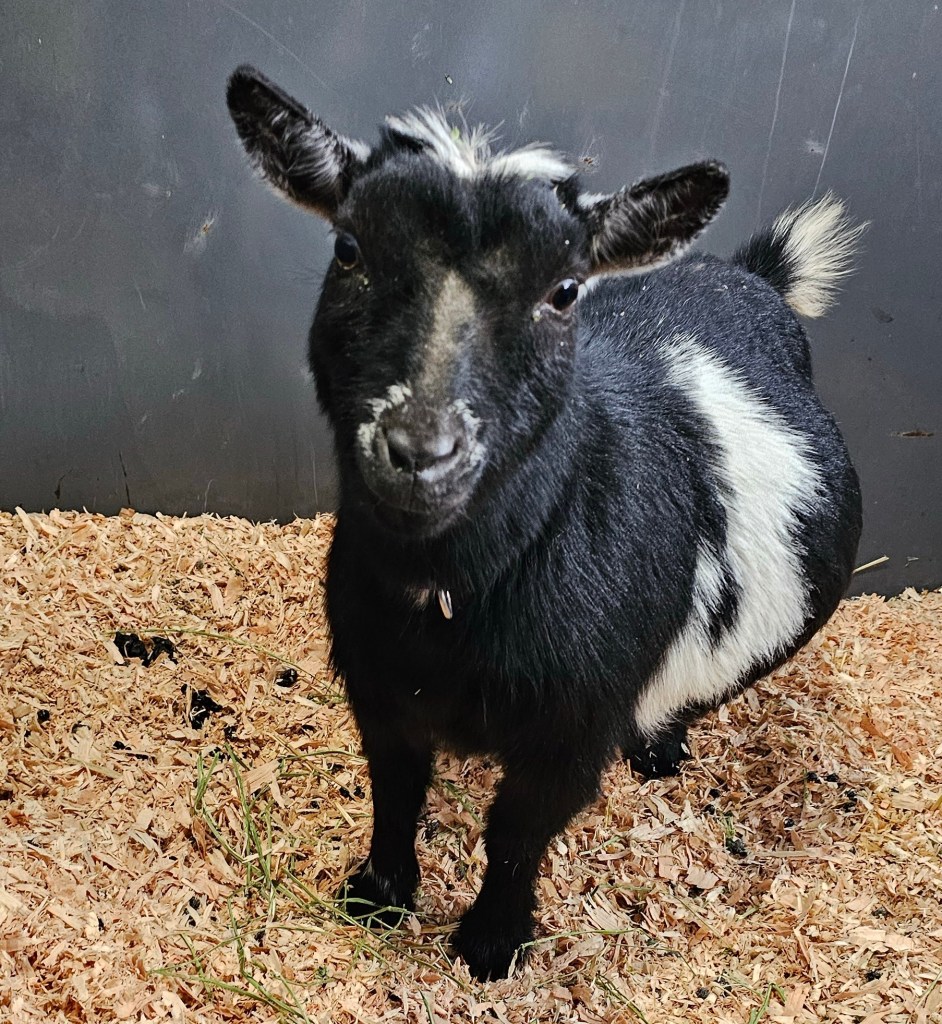 No Signs of Pregnancy Toxemia here!
My Goat Education
I find podcasts to be the easiest way for me to learn and keep on top of things. Unlike reading and actively researching it is something I can do while I’m milking, driving or feeding. I’m always adding new podcasts to my rotation. What are you listening to?
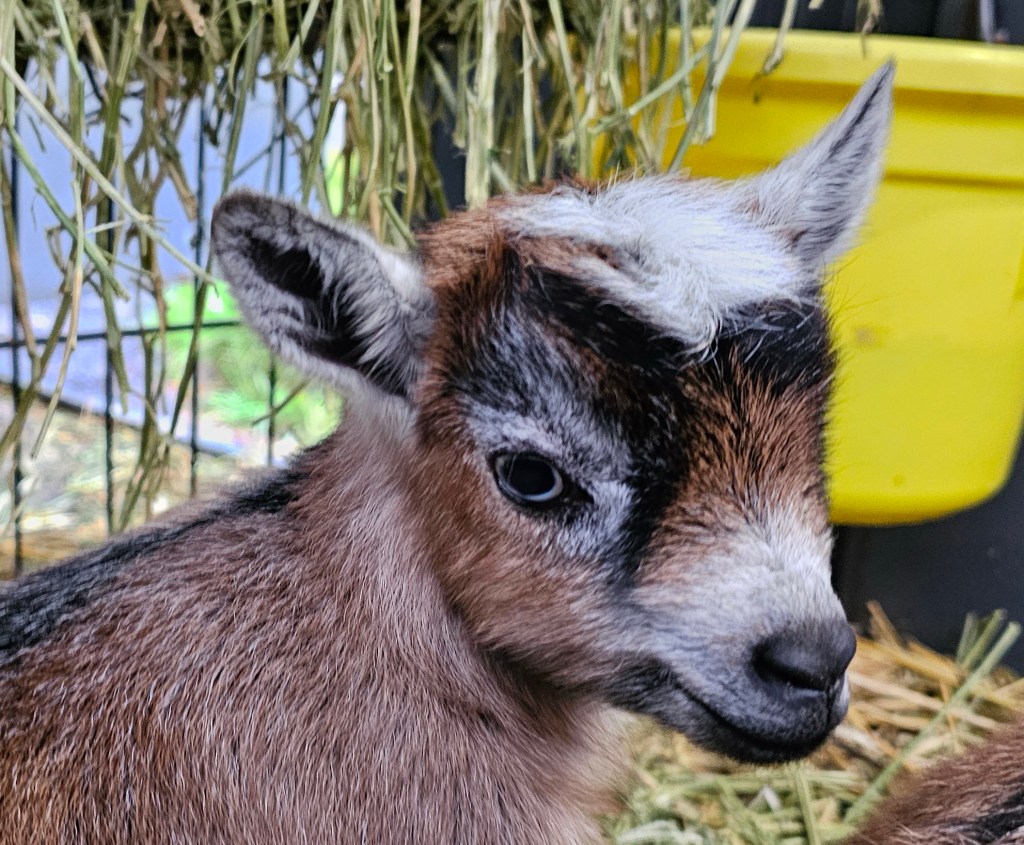 Kid Watch 2024 continues but at least I have this cutie to keep me company