Competitive Goating: So you want to show goats?
When I first got goats I said I just wanted some milk for home use. I had no intention to show goats or do anything else like that. Fast forward less than two years and I got the show bug. I showed horses as a kid and showing goats reminds me of that.
American Dairy Goat Association shows is the focus of this article. That is the registry of my goats and the shows I participate in.
Start with the right show goats
I was fortunate that I began with high quality registered goats, even though I never intended to show. If showing is your main interest in goats and you want to be competitive you will want to buy goats that have relatives that are competitive in the show ring. Depending on the breed you might want them very recently competitive in the show ring. I have Toggenburg and Nigerian Dwarf goats which are very different in consistency. Toggs were one of the original breeds in the ADGA registry there are very nice consistent lines that aren’t nearly as expensive as the Nigerians.
The Nigerian Dwarf goats are a different story. As a newer breed there are constant improvements and what might have won 10 years ago may or may not be competitive now. This really depends on the goat, lines and the region. That isn’t to say there aren’t older lines that are still very competitive, it is just that the breed has not been as consistent and is constantly improving.
Many folks you might purchase from will also mentor you. While it is possible to obtain goats from all over the country if you can find the right animals near you and someone who will mentor you that is ideal. If you are in the PNW I’d be happy to help you get started. Don’t have the right stock yet? I can help with that too.
Preparation for goat shows
Some of the preparation depends on if you are going to show does in milk, kids or even bucks depending on the show. I started out first by showing kids and I think that made it easier as there was a lot less to consider. I’m not going to go over showing bucks here, but it is pretty similar to the does.
The first thing you need to do is decide what show you are going to as that sets the timer of when you need to be prepared. For example it is best to clip goats a few days to two weeks prior to a show depending on breed and color. For example black goats look much less naked if you let their hair grow back a little bit before showing.
What classes to enter
Usually you need to enter a show a bit in advance, there are also typically discounts for entering early. Most shows have some type of substitution allowed, so while you want to figure out how many goats you intend to show in which classes if you need to shuffle around a little that is okay.
Classes are by age and especially for your first couple shows I wouldn’t recommend having multiple goats in the same class unless you have lots of help or are a large family. It is possible to find people to help at the shows if you do have goats in the same class. I think that would be added stress for the first couple shows until you get to know the flow of things.
Preparing to show juniors
The classes where the doe is not in milk and is up to two years old is Juniors. Many shows have junior classes but not all. Showing kids is a great way to get started as you don’t have to worry about udders which is another variable in show prep. This is how I got started.
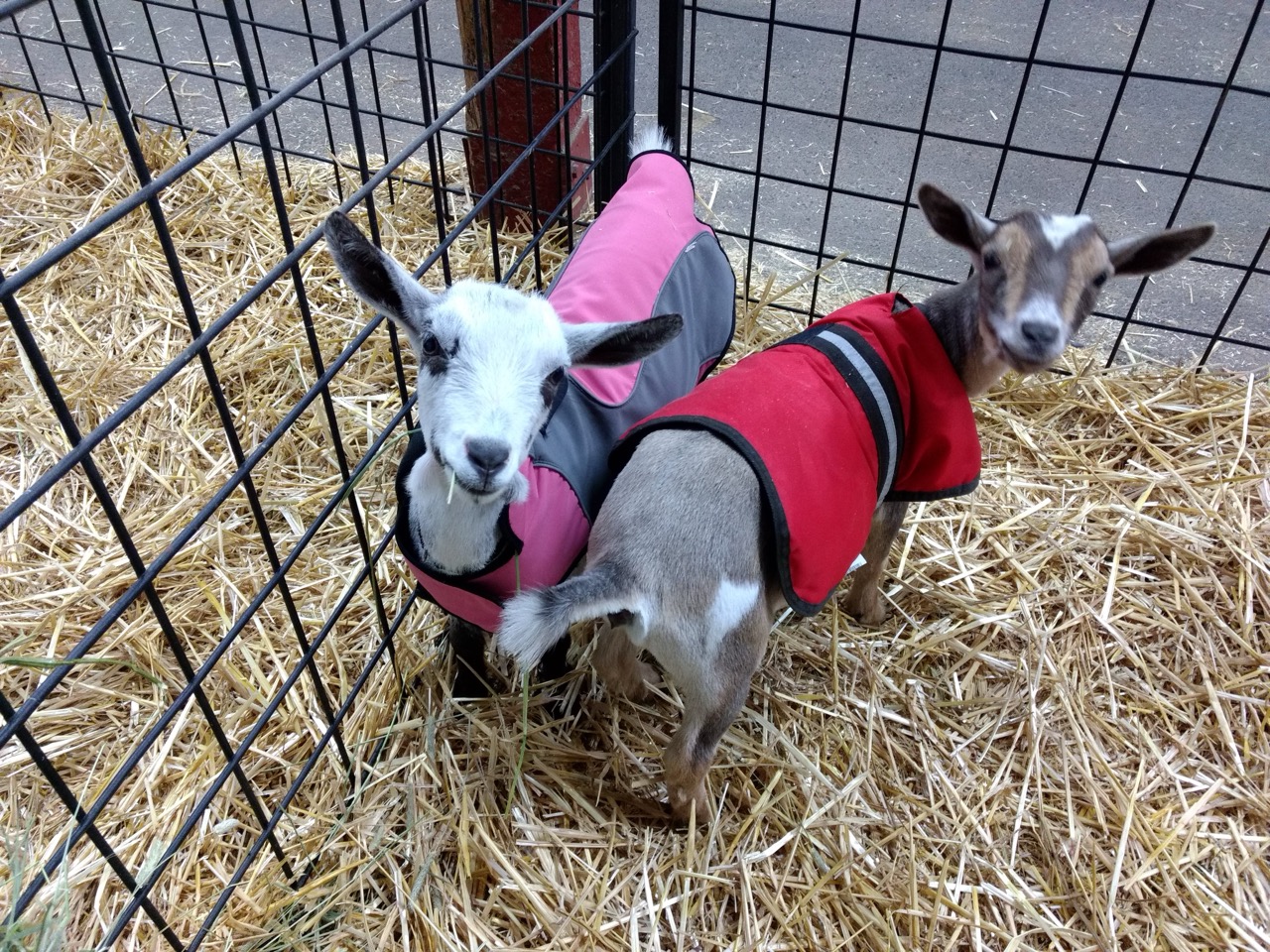 Junior goats waiting their turn
The main things to do a bit in advance to prepare a junior for the show tattoo, trim and train.
Goat identification
Tattoos are the main way goats are identified. It is possible to use microchips with ADGA you are still required to have a tattoo. If the goat was born on your property make sure to tattoo them well in advance of the show. Many people (myself included) have tattooed the day before and the day of but this is really added stress you don’t need. If the goat was obtained from someone else double check their tattoos prior to the show. If you win and the judge can’t read you goats tattoos then it won’t count.
Fitting your junior goats
Trimming means two things here both hoof trims and clipping the hair on the goat. It is best to keep up on your hoof trimming and ideally do a final show trim of their hooves about a week before. It is easy to do it the day before or the day of the show and be nervous and quick the goat or have them be sore. They will walk much better if you do this in advance.
Clipping the goat is where you remove much of the body hair. There are lots of different techniques out there but this is what I do. Early in the season I use a 5 blade to clip juniors all over and do a 7 on their face and a 10 on the inside of their ears. I’ll go deeply into clipping in another post. Goats that are clipped may need coats, especially in the spring when the weather is unpredictable. Black goats I like to clip a week and a half to two weeks out, other colors about a week before.
The final item to prepare your juniors is to train. Often called the “kicking and screaming class” the youngest kids often hurl themselves around or lay down. If you have practiced at home before they are much more likely cooperate. Practice leading them on the collar you are going to use for the show and also get them used to you moving their legs around to put them into place.
Preparing to show seniors
Seniors are all of the does in milk they can be as young as 1 year old and there is no upper limit on age. Seniors require some extra prep as there is the udder and when to freshen them to consider. They need all the same items as the juniors, but also you need to clip the udder. Some people use an actual razor to do this, but I personally just clip very short with a 40 or 50 blade.
What to wear
Humans
Humans showing are expected to wear “show whites”, you will see some variations of this but typically it is white pants, white collared shirt and a belt with closed toe shoes. Nationals is strict about this and other shows vary. I prefer to always be in “uniform” though my exception is I will wear white overalls sometimes. This is nice for showing juniors when you might bend over quite a bit.
Goats
The senior does and bucks I show with a “show chain” which is really a dog chain collar. It is good to have a variety of sizes and have enough for all the goats you are going to show so you don’t have to swap them between classes.
For juniors I use a black flat collar with a loop handle leash for my Nigerians and a rope loop collar for my full-sized goats. Some people show them in chain collars, but I find it is easier to control them and they are calmer with the flat collar. The exception to this is I will sometimes show well behaved dry yearlings in a chain collar as well.
Day before leaving
The day before I do last minute checks on everyone and pack everything. I usually have a list for humans and a list for goats. If we are staying overnight the list is quite a bit longer than if we are showing for the day.
Traveling
I generally try to arrive at the show the day before. I find it gives me time to settle in and get set-up. This year I did travel to and from a show all in the same day, but everything felt a little too rushed for me as I had to get up extremely early to make it in time.
Typically I milk at my normal time in the morning and load the does I’m taking to the show in the trailer directly after milking. I make sure that they have plenty of water and hay in the trailer as they drink most of the water they are going to drink right after milking. After I’m done I load any juniors I might be taking and do a final check on everything.
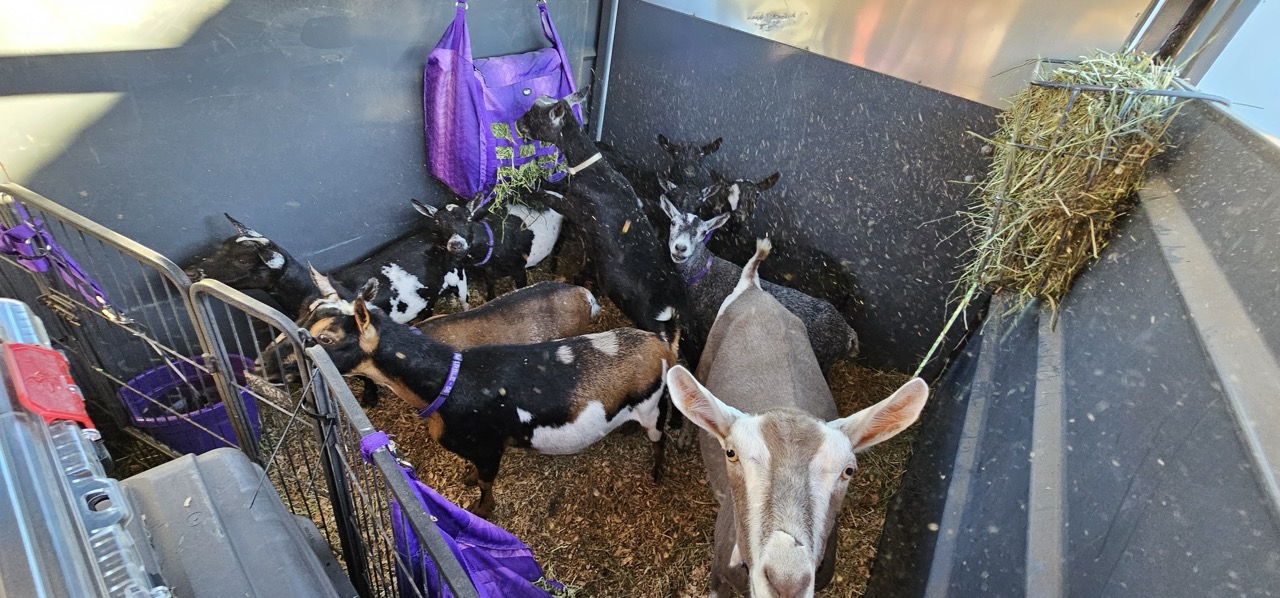 Goats loaded up and on their way to Nationals in 2023
While traveling I stop every couple hours to check on the goats and give them a chance to stand-up a drink. While in motion they generally lay down and are not eating or drinking.
Arrival
Sometimes you know where you pens are before arriving, sometimes you have to look first. When I arrive I park a bit out of the way, take some buckets with me and go investigate to figure out where I can pull up to make unloading as easy as possible. After I find my pens I put down bedding. Most shows you can purchase bedding or they provide it as part of your entry fee. Each pen also gets a full bucket of water.
I then go park as close as I can to unload. I start by pulling all the goats out first and then move their hay bags into their stalls. Then I unload everything else. Typically there is an unloading zone at shows and then it is polite to quickly move elsewhere so the next herd can unload. That is what I do next.
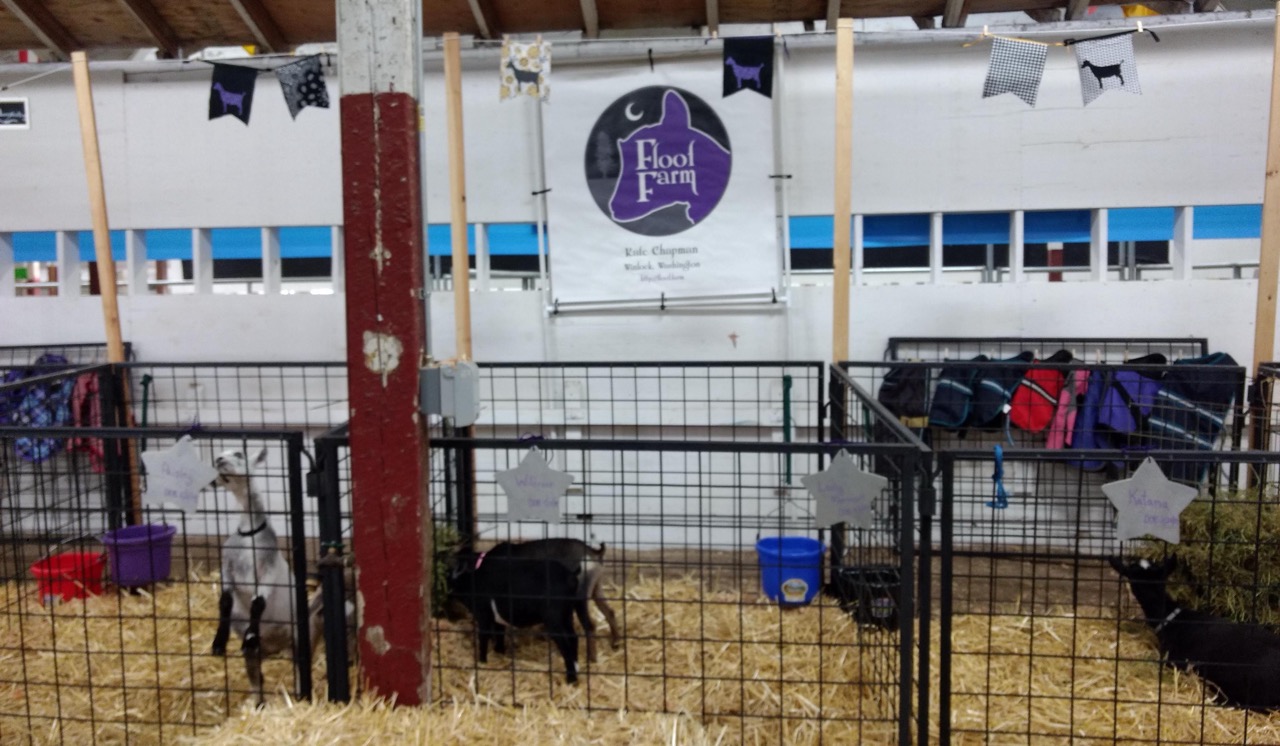 Set-up for Washington State Fair in 2019
Check-in
Most shows you an check-in the day before, but there are a few where you check-in in the morning. Make sure you don’t forget to check-in! Check-in is where you bring your goats’ paperwork and confirm that the entries are correct. This is also the time where you might make substitutions or scratch goats if you ended up not bringing as many as you intended.
Night Before
Nigerian Dwarf goats need a longer udder fill to look really nice in the show ring. I generally don’t milk them the night before, but I check their udders to make sure they aren’t too full. I give them grain in a bowl in the evening as they won’t be on the milk stand getting their usual ration. With my Toggenburg she only needs a 12 hour fill (sometimes even less) so I milk her at the usual time in the evening. In the evening I also check outside temperatures and put coats on goats if I think they need them.
Day of
Most shows start at 8 or 9am so I get up pretty early to make sure I’m ready. Generally that means I get up at 6am, but if I have many milking does I might even get up earlier. That is because I need to check their udders for fullness and clip their udders. I put all my does in milk on the stand with their grain ration and then clip their udders. Udder clipping is a whole project in itself worthy of another blog post. I also clean the ears and faces of all the goats I’m showing and give them a quick brush. Once the goats are ready I go change into my show whites.
Next up I present my goats in each of their classes and have a good time! The process of showing is a topic in itself, I hope this one was helpful. Hope to see me and my herd at a show? We maintain a list of shows we have attended and ones we hope to attend. ADGA also has a public list of the sanctioned shows on their website.
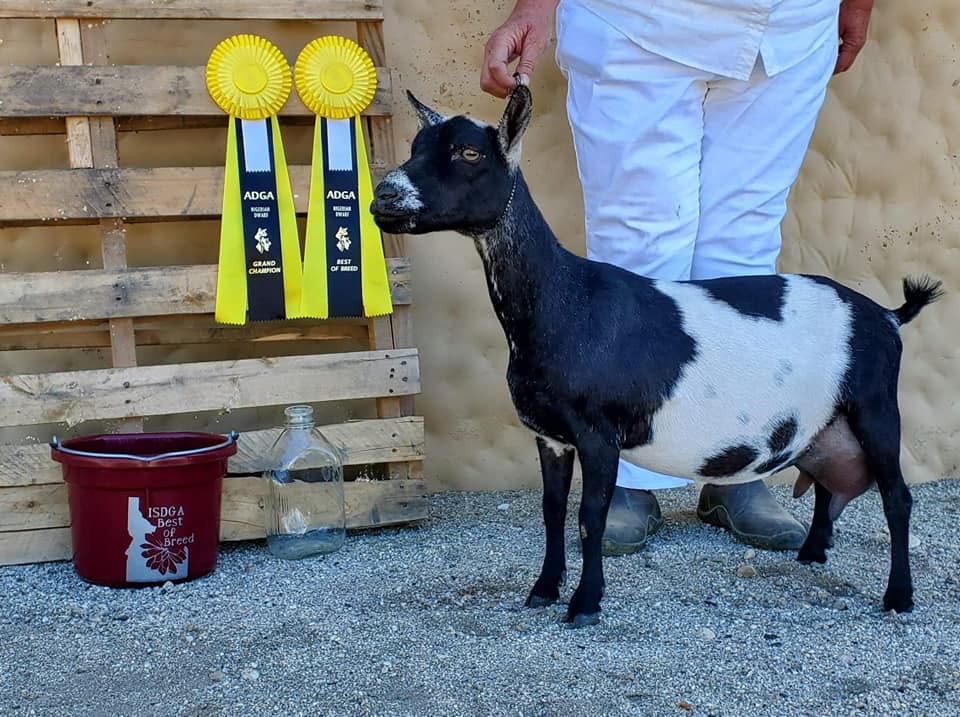 Katalina showing off her ribbons at the ISDGA Goat Show